Saturday, February 25, 2012

The Grapes of Wrath

This John Ford/Henry Fonda classic is on TCM tonight. Enjoy!
Truly magnificent film. Touching, sad and inspirational. The Grapes of Wrath is almost 70 years old, but the emotions and message are as true today as when this film debuted. Based on the classic novel by John Steinbeck, this is the story of the Joad family during the Great Depression. They have lost the family farm in the dust bowl. This story follows the Joads as they move to California in an effort to find work. Upon arriving they find conditions to be little better then where they left. Prejudice, hunger and unbearable conditions pressure the Joads at every stop.

Henry Fonda, as Tom Joad, gives one of the performances of his life. He gives us a window into the soul of someone who has been kicked around by life. He represents all those Americans who lost so much during the Great Depression. Masterfully directed by John Ford. He deserved the Oscar that he won for Best Director. Wonderful touch in what could have been a maudlin story. He got the very best out of the cast, script and crew.

While Fonda was terrific, I feel the best portrayal in the film goes to Jane Darwell. She plays Ma Joad. While Tom Joad can go off and fight the good fight, Ma Joad must stay and care for her large, ragtag family. Darwell is outstanding and received the academy award for Best Supporting Actress. Her character holds the family together and her acting holds this picture together. First-rate!

Compelling, moving and as important today as in 1940. One of the greatest ever.

Filmed in 1940, directed by John Ford, written by Nunnally Johnson, starring Henry Fonda, Jane Darwell, John Carradine and Russell Simpson.


Some notes on the John Steinbeck novel upon which this film is based. The novel was banned in several states and most of California upon its release. The book was so controversial that the library in Steinbeck's hometown, Salinas, CA., did not stock it until the 1990s. The novel's ending was just too provocative to be allowed in the 1940 film. In the book Rose-of-Sharon's baby is stillborn and she offers her breast milk to a dying man. Strong imagery for today let alone 1940. Also, I consider this book to be the best novel ever written. One note about the movie. Stalin banned this film in the Soviet Union. He did not want anyone in Russia knowing that even very poor Americans had a car.

Friday, February 17, 2012

Panic in the Streets

This is one of the early examples of the medical/pandemic thriller. Think Soderberg's 'Contagion' done in a film noir look. Enjoy it on TCM this afternoon!


Before Elia Kazan directed 'East of Eden', 'On the Waterfront' and 'A Streetcar named Desire' he developed his dramatic chops with this bit of half medical thriller/half detective film noir. Richard Widmark plays Dr. Reed, a Doctor for the Public Health Service. A coroner in New Orleans finds something suspicious with a murder victim and calls in Reed to investigate. Reed believes this body is infected with pneumonic plague and that the city is under a major biological threat. Most of the brass for the city assume he is overly-dramatic, but the Mayor orders the police to help in every way possible. Paul Douglas portrays police captain Warren who has been given the task of solving the murder and containing the disease. Our two heroes have only 48 hours before the plague becomes contagious and spreads throughout the city. Thousands of lives are at stake.

Kazan understands the need for a story to move if we are to have drama. The conflict between Dr. Reed and Captain Warren is in the forefront of the film, but the underlying tension of the plague helps maintain an extremely crisp pace. I read a dozen other reviews of this movie and every single one of them used the word taut. Who am I to argue? Can the protagonists solve the murder and save the city? As viewers we know that the killer is local thug 'Blackie'. He is played, in his film debut, by one-armed push up master Jack Palance. His sidekick, the soft toady 'Fitch' is wonderfully acted by Zero Mostel. There are not a lot of films in which Mostel plays a criminal. It is refreshing casting. Both Palance and Mostel are terrific. Palance plays the evil heavy with aplomb while Mostel's whining lackey is spot-on.


Today, with the many threats facing our planet, the idea of a disease spreading "panic in the streets" is all too real. But before the debut of this film not much had been made of the possibility. Some of the science in this movie is less-than-perfect, but audiences were both entertained and disturbed by the film and its concepts. Writers Edna and Edward Anhalt, who wrote the story upon which this film is based, were awarded an Academy Award for their work in thrilling/terrifying the audience.

Panic in the Streets is a taut thriller. It is fast and most enjoyable.

Filmed in 1950, directed by Elia Kazan, written by Richard Murphy from the story by Edna and Edward Anhalt, starring Richard Widmark, Jack Palance, Barbara Bel Geddes, Paul Douglas and Zero Mostel. Towards the end of the film, Jack Palance's character climbs a boat rope in an effort to escape. He performed this stunt personally after two different professional stuntmen could not make it up the rope!

Thursday, January 26, 2012

The Hustler

Since today would be Paul Newman's 87th birthday, let's look at one of his finest films!


I invited a few friends over to watch this film. None had ever seen it. They were all quite impressed by this hidden gem. Nominated for 4 acting Oscars, Best Picture, Best Director, Best Screenplay and more. The Hustler tells the story of Fast Eddie Felson, pool-hustler extraordinaire. He travels the small-time circuit looking for people to hustle in a game of pool. He is, of course, better than anyone he ever meets. He allows them to win, ups the stakes and takes them for everything they've got. Many of his opponents don't appreciate the treatment. Later he challenges Minnesota Fats to a big-money game. The action between Fast Eddie and Fats is intense and furious.

The atmosphere of pool halls can be felt by the viewer. I can smell the smoke, taste the beer, feel the desperation while I watch. The cinematographer Eugen Shuftan won an academy award. The Hustler also won for art/set direction. Both are well-deserved. However, it is the actors that carry the movie. Paul Newman is stunning. He is Fast Eddie Felson. Both he and fellow nominee Jackie Gleason did all their own pool shots for the film. Piper Laurie, as Fast Eddie's on-off love interest is amazing. I truly feel for her as I watch. George C. Scott, who refused his nomination for best supporting actor, is fantastic as Newman's big backer.


The Hustler is also credited with saving pool in America. The game was being outlawed and run out of many American cities and towns. Pool was thought to be decadent. According to R.A. Dyer's book 'Hustler Days' pool was on its death bed. Then this movie came out and brought pool back into the mainstream. Millions started playing, pool halls opened across the land and the game was saved. Not bad for a movie.

Filmed in 1961, directed by Robert Rossen, written by Rossen and Sydney Carroll, starring Paul Newman, Jackie Gleason, Piper Laurie, Michael Constantine and George C. Scott. One bit of trivia. Newman and Gleason filmed all their own pool shots (except for the difficult masse shot). But before signing to do this film Newman had never played pool. He took out his dining room table and practiced all day for weeks before shooting started to improve his skills.

Tuesday, January 24, 2012

Obscene

The free flow of books, ideas and information today is due, in no small part, to the efforts of Barney Rossett.  Mr. Rossett was the publisher/owner of Grove Press and The Evergreen Review.  During the 1950s Grove Press fought long-running legal battles to publish, in America, books like Henry Miller's 'Tropic of Cancer' and, later, the works of William S. Burroughs like 'Naked Lunch'. Grove and Evergreen also introduced writers like Samuel Beckett (they published 'Waiting for Godot'), Pablo Neruda, Octavio Paz, Kenzaburo Oe and, my personal favorite, Eugene Ionesco.  For his efforts, Rossett fought decades of lawsuits and arrests for publishing these materials.  Later, Grove introduced some films like 'I am Curious:Yellow' and added a fight for cinematic freedom as well.

Miller's works were already sold in Europe, but were banned in the United States.  They were considered "obscene".  Rossett was introduced to these works on trips to Europe.  He decided that they should be available in America.  In a day and age when you can get almost anything on Amazon.com it is important to remember that only 50 years ago owning or selling these books would get you arrested. 


As Grove would publish these books they had to fight legal battles as they were confiscated in many different states or cities.  He practically bankrupted himself in the legal battle for freedom of the press.  We give awards and medals to heroic individuals and I believe Mr. Rossett deserves one as well.

Obscene is a simple documentary that tells the story of Rossett's life-long commitment to freedom.  There are interviews with many authors and compatriots.  There is also a look at the efforts of the FBI to close him down.  Directors Daniel O'Connor and Neil Ortonberg let the players tell the story in their own words.  I found many nuggets of interesting, off-beat and compelling details in this fascinating story.

Filmed in 2007, directed by Daniel O'Connor and Neil Ortonberg, starring Barney Rossett, featuring appearances by John Waters, Gore Vidal, Erica Jong, Ray Manzarek, Al Goldstein, John Sayles and many other celebrities of writing and film.

Friday, January 20, 2012

Caper double feature

There is a wonderful double feature of "caper" flicks on TCM this evening. Relax, make some popcorn and get comfy!

First-up is the 1971 Sean Connery great The Anderson Tapes. This film is one of Connery's attempts to move away from the Bond image and create new characters on the big screen. For more information, follow this link to my earlier article.

Following The Anderson Tapes is the original 1974 Walter Mathau gem The Taking of Pelham One Two Three. This post refers to the 1974 original not the Travolta & Denzel remake. The remake is worth seeing, but very different in tone.


I was filled with trepidation when I first learned of the remake of this film. The original was released when I was 13 and is one of my favorite films of the 70s. Because it is near my heart I was quite worried that the original classic would be tainted. But that is not possible. This movie is one of the treasures of the era. It is a caper flick extraordinaire. When Walter Matthau asks "how you going to get away with this" I still wonder. Even though I have seen the film half a dozen times. The idea of hijacking a subway car is preposterous on its face. The Peter Stone screenplay of the John Godey novel makes it all come together.

Everyman actor Walter Matthau plays Lt. Zeke Garber, the transit cop in charge of protecting the hostages on hijacked subway car Pelham 123. Robert Shaw portrays Mr. Blue. He is the mercenary who has hijacked the subway car. He is aided by three associates named Mr. Green, Mr. Brown and Mr. Grey. Because we know nothing about the hijackers, not even their names, they seem more menacing. Mr. Green (Martin Balsam) is a former subway employee with a grudge who has figured out a way to "get away with it". The film splits its focus between the subway car and the police/city efforts to deal with these criminals.

I love caper movies. How will the criminals steal the loot, trick the police and escape capture are concepts that keep my attention. Also, the efforts of law enforcement or the victims to bring them to justice is an intriguing story line. The Taking of Pelham One Two Three combines both parts of the caper movie with equal aplomb. The criminals, and their master plan, are believable and compelling. The transit cops, city police and city officials are also realistic and interesting. I spend the viewing time following the details and personalities as they face each new intense moment.


Walter Matthau is terrific. He plays the "regular guy" with skill. His characters are available to the audience. I feel like I know the guy he portrays (see my earlier blog about 'Charley Varrick'). He carries this film. With very little actual action for 3/4ths of this film, the dialogue and acting must capture the viewer and hold them. The entire cast does a fine job. Especially Matthau, Robert Shaw and Martin Balsam. All three of them make me want to see what happens next.

The David Shire score helps keep the tempo of the film. It is raw and gritty and makes me feel like I am on the train. The opening of the film has simple images, but the score makes you feel like the action is already happening! The soundtrack has been difficult to find for years. When you can find it, the soundtrack is usually expensive. NPR film music expert Andy Trudeau considers this film's score to be one his top 10 ever.

Interesting and exciting. Enjoy The Taking of Pelham One Two Three.

Filmed in 1974, directed by Joseph Sargent, written by Peter Stone, starring Walter Matthau, Robert Shaw, Martin Balsam, Hector Elizondo and Jerry Stiller. For tv fans, look for a quick cameo by Doris Roberts as the Mayor's wife.

Notes:Since the release of this movie no #6 subway has left the Pelham Bay station at either 1:23 or 13:23. Just a little superstitious I guess. Also, the producer says that this film did very well at the box office in New York, London, Paris and Toronto, but was a flop in most other cities. Those four cities have large subway systems. And the color of the hat that each criminal wears matches their name

Thursday, January 19, 2012

The Train

This Frankenheimer classic is on TCM today. Enjoy!
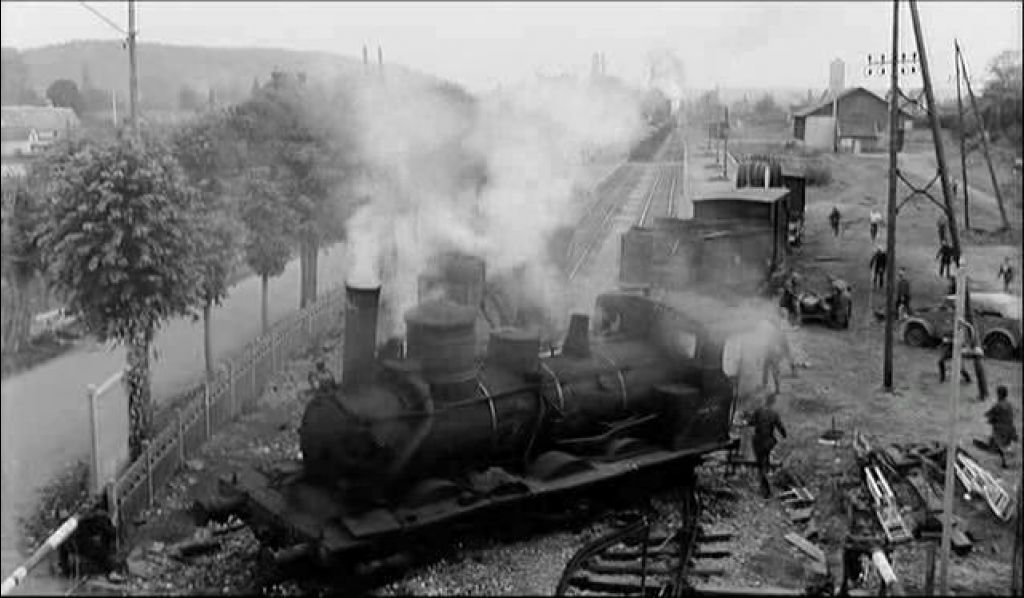
This is a most odd and excellent film. In many ways it defies expectations. It is a story of the French resistance fighting the Germans just as Paris is liberated by the Allies. But this movie is not a WW II epic. It stars Burt Lancaster. But he does not portray the typical leading man. The Train is directed by John Frankenheimer. But this film is nothing like his masterpiece 'The Manchurian Candidate' nor his hidden gem 'Seconds' (which was the subject of my first article). It is based upon a true story, but views like an action thriller. So instead of many cliches and typical/expected scenes, this film features a thriller atmosphere with unique characters and intriguing action.

The plot is simple. A German officer is stealing hundreds of rare paintings from Paris museums just as the Allies are to arrive in Paris during 1944. Picassos, Renoirs, Van Goghs, Gaugins, Cezannes and a dozen other artists for the ages. He loves the art, but convinces his superiors that the value of the paintings means they must be whisked away to Germany before the NAZIs leave France. Lancaster plays a railroad yard supervisor who is part of the French underground. The resistance wants him to save the paintings as a "national treasure". He could not care less about art and worries about who might be injured or killed in this dangerous missions just hours before they would all be liberated. But, of course, he eventually takes the mission and must stop the train from leaving France.


Although the plot is simple, Frankenheimer rarely is. The director weaves a fabulous action/caper thriller that features subterfuge, air raids, sabotage, hostages and a dozen other moments to keep us intrigued. I spent the entire time viewing this film with an anticipation of "what could be next?". I appreciate a movie that keeps me engrossed in the action. How could these few resistance fighters stave off the NAZIs and save the artistic heritage of a nation? I won't spoil it, but they use some very unique and interesting tricks, stunts and attacks to try to save the day. But is it possible? You will have to watch The Train to find out for sure!

No look at this film is complete without a mention of the fantastic performance by Paul Scofield. His work as the German officer hell-bent on keeping these masterpieces in his own, and by extension German, hands is powerful. You can feel his drive and desire throughout the film. The Train is almost a battle of wills between Scofield's German officer and Lancaster's French resistance fighter. And an action-packed battle it is. Also, the screenwriter's fine work was rewarded with an Oscar nomination.


Filmed in 1964, directed by John Frankenheimer, written by Franklin Coen & Frank Davis from the novel by Rose Valland, starring Burt Lancaster, Paul Scofield, Jeanne Moreau and Albert Remy. For more info on the Germans attempts to loot the art of France and the Allies efforts to recover it, check out Valland's fantastic book 'Rescuing Da Vinci'. It is most interesting.

Thursday, December 22, 2011

The Thin Man

All 6 Thin Man movies are on TCM today! Skip work and catch them all!


Never before nor since have two people consumed so much alcohol so successfully. William Powell and Myrna Loy team-up as the mystery solving sleuths Nick and Nora Charles. This film is based upon a novel by Dashiell Hammett. He is also the creator of the hardboiled detective Sam Spade (best portrayed by Humphrey Bogart). But in The Thin Man his crime fighters are a wealthy socialite and her former detective husband. The only things that Nick and Nora like more than solving murders are drinking and witty banter. And there is plenty of both here.

Powell and Loy are so fabulous together that most other screen couples pale in comparison. Critics loved their on-screen chemistry. Audiences so enjoyed them together, along with their dog 'Asta', that the studio made 5 more movies in this series. The thin man in the title is the victim of a murder. Nick, who has "retired" after marrying Nora, is roped into helping solve the murder. He eventually does. But the murder plot, while interesting and clever, is just the vehicle for us to enjoy this pair. Both Powell and Loy give the performances of their careers. They are fine actors with a full and rich body of work, but I don't think they could ever escape the pressure of such successful teamwork. Their timing is exquisite, their chemistry divine and their delivery perfection. Sometimes I watch The Thin Man just to enjoy their work.


Veteran Director W.S. Van Dyke wisely lets Powell and Loy go for it. He seemingly allows two master actors who work magnificently together to run free. But unlike much of today's "improv" comedy, The Thin Man is crisp and quick. No pauses to stare into the camera nor slow deliveries here. Script writers Albert Hackett and Francis Goodrich gave them so many great lines for us to enjoy that you may miss some of them the first time through. When you enjoy this movie be sure to wait a few weeks and then try it again. I guarantee that you will then realize how much fun you missed the first time. So pull up a chair and pour yourself a stiff martini. You may not need it, but you sure are going to want one!

Filmed in 1934, directed by W.S. Van Dyke, written by Albert Hackett and Francis Goodrich, starring William Powell, Myrna Loy, Maureen O'Sullivan, Nat Pendelton and Cesar Romero.